Why You Can See Scalp Through Blonde Hair and How To Make It Less Visible

You're standing in the bathroom, the overhead light hits just right, and suddenly you can see way more scalp than you expected. For blondes, this moment tends to hit harder - and earlier - than it does for people with darker hair.
The truth is, light hair and visible scalp often go hand in hand, and it's not always a sign that something's wrong. This guide breaks down why blonde hair reveals more scalp, how to tell if you're actually experiencing thinning, and practical ways to create the appearance of fuller, thicker hair starting today.
Is It Normal to See Your Scalp Through Blonde Hair
If you've ever caught a glimpse of your scalp in the bathroom mirror and felt a little panic, you're not alone. Visible scalp with blonde hair is incredibly common, and in most cases, it's completely normal. The combination of light-colored hair against skin, plus the naturally fine texture many blondes have, simply makes the scalp easier to see than it would be with darker shades.
Two terms are helpful here. Hair density refers to how many strands grow per square inch on your scalp. Hair thickness describes the diameter of each individual strand. You can have lots of strands that are each very fine, or fewer strands that are each quite thick - and both affect how much scalp peeks through.
Certain situations make scalp visibility more obvious:
- At the part line: A thin strip of visible scalp is typical for almost everyone
- When hair is wet: Strands clump together and lie flat, temporarily revealing more scalp
- Under bright lighting: Overhead bathroom lights or direct sunlight can make thinning appear more dramatic than it actually is
Why Blonde Hair Makes Scalp More Visible Than Darker Shades
So why does blonde hair seem to show so much more scalp than brunette or black hair? There are a few real reasons - and once you know them, it's easier to stop worrying and start problem-solving.
Low Contrast Between Light Hair and Scalp
Dark hair creates a visual "shadow" effect that helps camouflage the scalp underneath. Blonde hair doesn't have that same contrast working in its favor. If your scalp runs pink or red, the difference becomes even more noticeable.
Fine Hair Texture Common in Natural Blondes
Natural blonde hair often has a smaller strand diameter than darker hair types. Each strand simply provides less coverage, which means you're working with less "material" to conceal the scalp - even if you have plenty of strands overall.
Damage from Bleaching and Highlighting
Chemical processing weakens the hair's outer protective layer, called the cuticle. Over time, this leads to breakage and reduced volume. Bleached blonde hair tends to be more fragile, and that fragility can show up as increased scalp visibility when strands thin out or snap off.
Common Causes of Hair Thinning on Top of Head
Beyond the natural properties of blonde hair, several factors can cause actual thinning - particularly on top of the head where it's most visible.
Aging and Hormonal Changes
Natural aging, perimenopause, and menopause are common triggers for hair changes. During these transitions, hair growth cycles often slow down, and individual strands may become finer.
Genetic Hair Loss
Androgenetic alopecia (pattern hair loss) affects 50 million men and 30 million women in the United States. It typically shows up first as thinning at the crown or a gradually widening part line, and it tends to run in families.
Heat and Chemical Damage
Repeated heat styling, bleaching, and chemical treatments cause cumulative breakage over time. The damage often concentrates on the top of the head, where hair gets the most exposure to styling tools.
Nutritional Deficiencies
Low levels of iron, vitamin D, or protein can impact hair growth. A 2025 systematic review of 61,332 participants found higher vitamin D and iron levels were inversely related to alopecia. If you suspect a deficiency might be contributing, a doctor can run simple blood tests to check.
Stress and Lifestyle Factors
Significant stress can trigger telogen effluvium - a temporary condition where up to 70% of growing hair enters the shedding phase at once. The good news is that this type of shedding typically resolves once the stressor passes.
Scalp Conditions
Conditions like seborrheic dermatitis or psoriasis create an unhealthy scalp environment that can affect hair growth. Persistent itching, flaking, or redness is worth mentioning to a dermatologist.
Signs Your Hair Is Thinning and Not Just Naturally Fine
It can be tricky to tell the difference between naturally fine hair and actual thinning. A few everyday observations can help you figure out which you're dealing with.
Wider Part Line When Parting Hair
If you can see more scalp along your part than you used to, that's often an early indicator of thinning rather than just your natural texture.
More Hair Shedding In Your Brush or Shower
Some daily shedding is normal - typically 50 to 100 strands. A noticeable and sustained increase in the hair you find in your brush or drain, though, can signal something more.
Ponytail Circumference Feels Smaller
Here's a simple test: wrap a hair tie around your ponytail and notice how many times it wraps. If that number has increased over time, your overall density may have decreased.
Seeing Scalp When Hair Is Wet
Some scalp visibility when wet is normal for everyone. But if there's a dramatic difference between your wet and dry hair, it may indicate reduced density rather than just fine strands.
Visible Scalp Through Your Hairline
Thinning at the temples and along the hairline is common, often linked to hormonal changes or traction from tight hairstyles worn repeatedly over time.
When to See a Doctor About Thinning Hair
While some scalp visibility is perfectly normal, certain signs are worth bringing to a doctor or dermatologist.
Sudden or Patchy Hair Loss
Rapid or uneven hair loss appearing in patches may indicate alopecia areata or other conditions that benefit from early treatment.
Scalp Redness, Itching, or Flaking
Persistent irritation could signal an underlying condition affecting your follicles and inhibiting healthy growth.
Thinning Alongside Other Symptoms
If hair thinning accompanies fatigue, weight changes, or skin issues, it may point to thyroid problems or other health concerns worth investigating.
How to Make Thin Hair Look Fuller Instantly
Looking for solutions you can try today? A few practical approaches can make your hair appear thicker and fuller right away.
1. Apply Hair Thickening Fibers or Hairline Powder
Hair Thickening Fibers use statically charged micropigments - tiny color particles that cling to existing hair and instantly create the appearance of greater density. They come in a range of blonde shades, apply without mess, and last until your next wash.
2. Use a Root-Lifting Volumizing Spray
Volumizing sprays add grip and lift directly at the roots.
3. Change Your Part Placement
A simple switch to the opposite side can create instant volume by lifting hair that's been trained to lie flat. A zigzag part can also help disguise thinning along the part line.
4. Try Blow-Drying Techniques for Lift
Flip your head upside down while blow-drying, or use a round brush to lift roots away from the scalp as you dry. Both approaches create lasting volume at the crown.
5. Choose Hairstyles That Add Volume
Loose waves, textured styles, and strategic teasing all create the illusion of fullness. Tight, slicked-back styles tend to expose the scalp and flatten hair against the head.
Best Hair Color Strategies for Thinning Blonde Hair
The right color approach can minimize scalp visibility without requiring you to go darker overall.
How Scalp Color Affects Visibility
Pink or red scalp tones contrast more with blonde hair, making the scalp more noticeable. Some people use scalp-tinted products or work with their colorist to adjust their shade slightly to reduce that contrast.
Adding Lowlights for Dimension and Coverage
Strategically placed lowlights - darker strands woven throughout - create depth and a shadow effect that helps make the scalp less obvious without changing your overall color.
Root Smudging and Shadowing Techniques
A stylist can apply a slightly darker color at the root area and blend it down, a technique called a root smudge or shadow root. This softens the harsh line between hair and scalp. Finding a colorist experienced with fine hair makes a real difference here.
Haircuts That Minimize Visible Scalp
The right cut works with your hair's natural texture to create the illusion of volume and density.
Layered Cuts for Movement and Fullness
Face-framing layers add dimension and movement. However, over-layering can backfire and make ends look thin and stringy - so moderation is key.
Blunt Cuts for Thicker-Looking Ends
A one-length or blunt cut (like a bob or lob) makes hair look denser by creating a solid, weighted line at the ends rather than wispy, tapered tips.
Shorter Styles That Create Volume
Shorter styles like bobs, lobs, and pixie cuts often make fine hair appear much fuller. Less length means less weight pulling hair flat against the scalp.
How to Support Healthy Hair Growth Long Term
While instant fixes are helpful, sustainable habits can support long-term hair health alongside your styling routine.
Gentle Washing and Styling Practices
Avoiding tight hairstyles, reducing heat tool frequency, and detangling gently with a wide-tooth comb all help minimize breakage. Gentle products formulated for fine hair, like BOLDIFY Hair Thickening Shampoo and Conditioner, can also make a difference.
Key Ingredients for Scalp and Hair Health
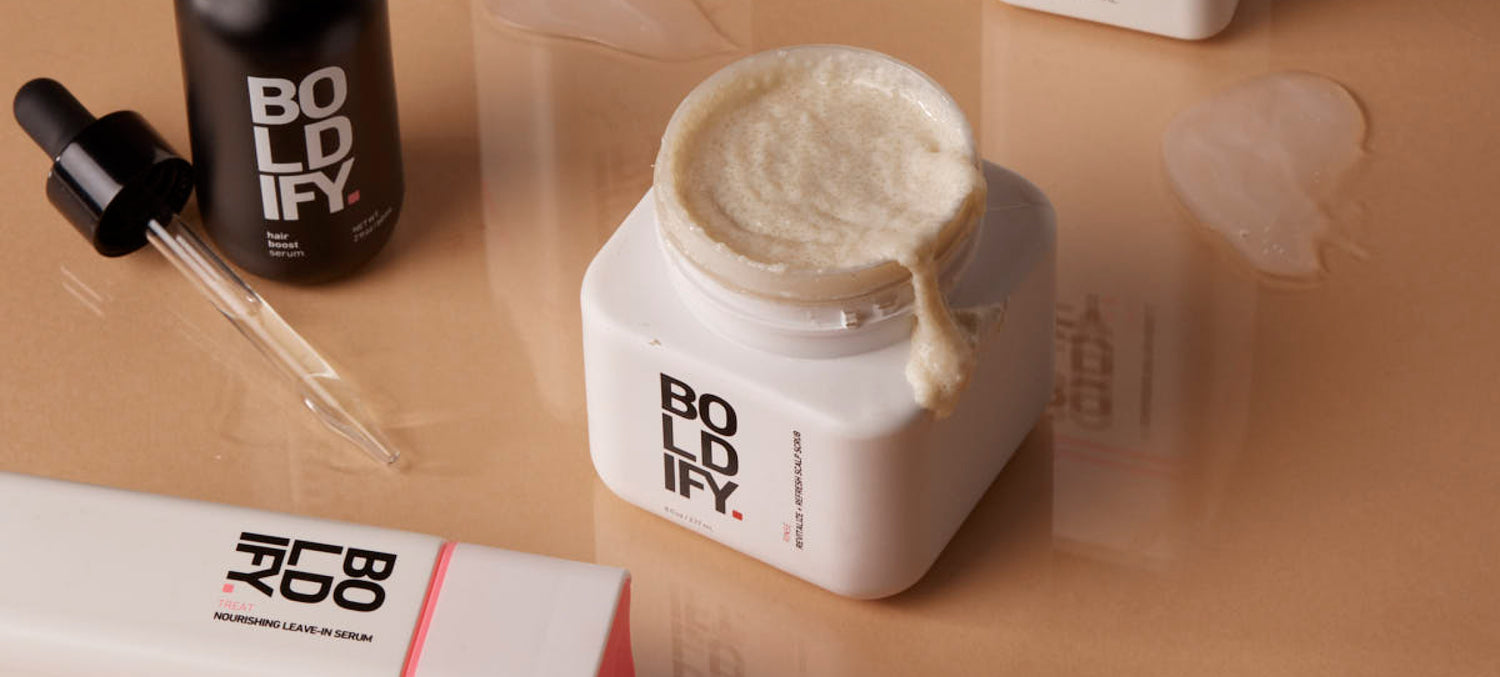
Look for ingredients like biotin, rosemary, argan oil, and keratin in your hair products. A concentrated Hair Boost Serum with these ingredients may help support a healthy scalp and stronger-feeling strands over time.
Lifestyle Habits That Promote Stronger Hair
A balanced diet, effective stress management, adequate sleep, and regular scalp care all support hair health from the inside out. None of these are quick fixes, but they add up over time.
Simple Steps to Feel Confident in Your Hair Every Day
Visible scalp doesn't have to define how you feel about your hair. Whether your scalp shows due to naturally fine blonde hair or gradual thinning, there are both instant and long-term ways to add fullness and feel more confident.
From styling approaches to targeted products like thickening fibers and volumizing sprays, small changes can make a noticeable difference. The key is finding what works for your hair and your routine - then building from there.
Frequently Asked Questions About Blonde Hair and Visible Scalp
Does blonde hair make scalp more visible than darker hair?
Yes. Blonde hair creates less contrast with the scalp than darker shades, making any gaps or thinning more noticeable - especially under bright lighting.
How much scalp showing through hair is normal?
Some scalp visibility at the part line, crown, or when hair is wet is completely normal. The amount varies based on hair density, texture, and lighting conditions.
Why does my scalp show more when my hair is wet than when it is dry?
Wet hair clumps together and lies flat against the head, temporarily reducing coverage. Once hair dries and regains volume, scalp visibility typically decreases.
Will going darker help hide my thinning scalp?
Darker hair color can create more contrast and visual density. However, techniques like lowlights or root shadowing can achieve similar results without a full color change.
Do hair fibers and powders work on blonde hair?
Yes. Hair fibers and powders come in light blonde shades designed to blend seamlessly and reduce scalp visibility at the part line, hairline, and crown.